- March 5, 2026
- Posted by: admin
- Category: BitCoin, Blockchain, Cryptocurrency, Investments

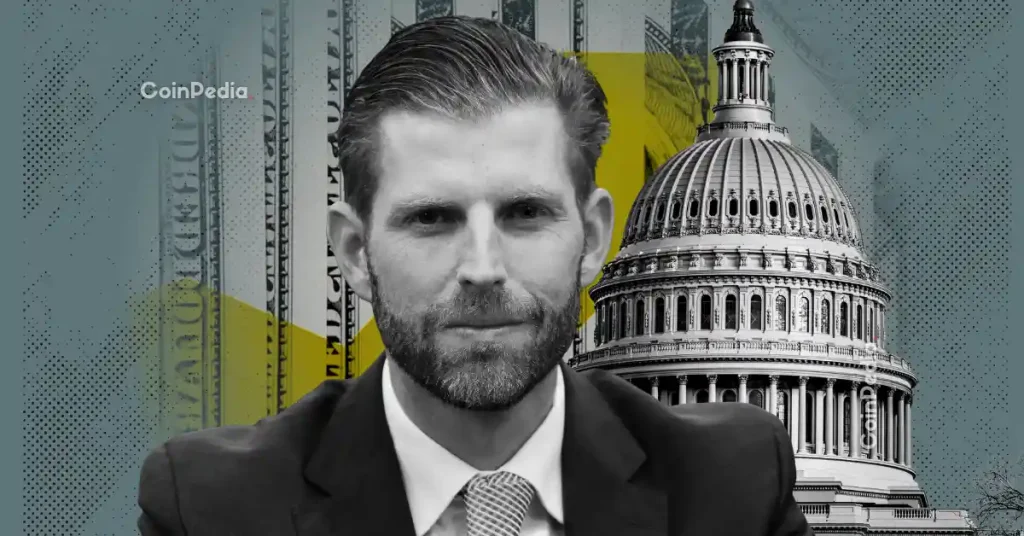
The post Eric Trump Accuses Big Banks JPMorgan, BoA of Blocking Crypto Yields appeared first on Coinpedia Fintech News
As debate over the CLARITY Act grows, Eric Trump accuses major banks of blocking crypto yields. He claims banks like JPMorgan, Bank of America, and others are try to blocking high crypto yields, claiming they want to protect bank profits
His comment came after Donald Trump said banks oppose the CLARITY Act because they fear it could reduce their profits.
Eric Trump Says Banks Blocking Crypto Yields
In a recent post on X, Eric Trump claimed that some of the largest U.S. banks, including JPMorgan Chase, Bank of America, and Wells Fargo, are trying to convince lawmakers to limit crypto platforms from offering high savings yields.
He believes they are using “financial stability” as a reason to protect their dominance over the market.
However, banks disagree with this. Industry groups warn that high stablecoin yields could act like unregulated deposits and pull money away from the banking system, which may weaken lending activity.
Banking groups also say up to $6.6 trillion in deposits could be at risk if interest-paying stablecoins become widely used.
Eric Trump added that banks fear losing 30% to 35% of their deposits if people move their savings to crypto platforms offering higher returns.
Stablecoin Yields vs Bank Savings Rates
At the center of the debate is the large gap between what banks pay customers and what crypto platforms claim they can offer.
Most large banks currently offer savings rates between 0.01% and 0.05%, while several crypto companies say stablecoin programs could deliver yields of 4% to 5% or more.
Eric Trump said banks benefit from this big gap. People earn almost nothing on their savings, while banks can earn around 4% or more from the Federal Reserve. According to him, this creates huge profits for banks but very little return for customers.
Crypto Leaders Support Clear Regulations for Stablecoins
Several figures in the digital asset industry have backed clearer crypto rules. Among them are Brad Garlinghouse and Cynthia Lummis, both of whom have expressed support for policies that allow crypto businesses to operate with defined legal frameworks.
Meanwhile, Jerome Powell recently said banks are “well equipped to serve crypto-related clients,” signaling that traditional finance may still play a role in the evolving digital asset economy.
For now, the CLARITY Act remains stalled in the Senate Banking Committee. Perhaps crypto leaders believe that it will pass by mid-2026.