- March 18, 2026
- Posted by: admin
- Category: BitCoin, Blockchain, Cryptocurrency, Investments

The post Biggest Oil Shock in 45 Years: What Happens to Bitcoin If Oil Price Hits $175? appeared first on Coinpedia Fintech News
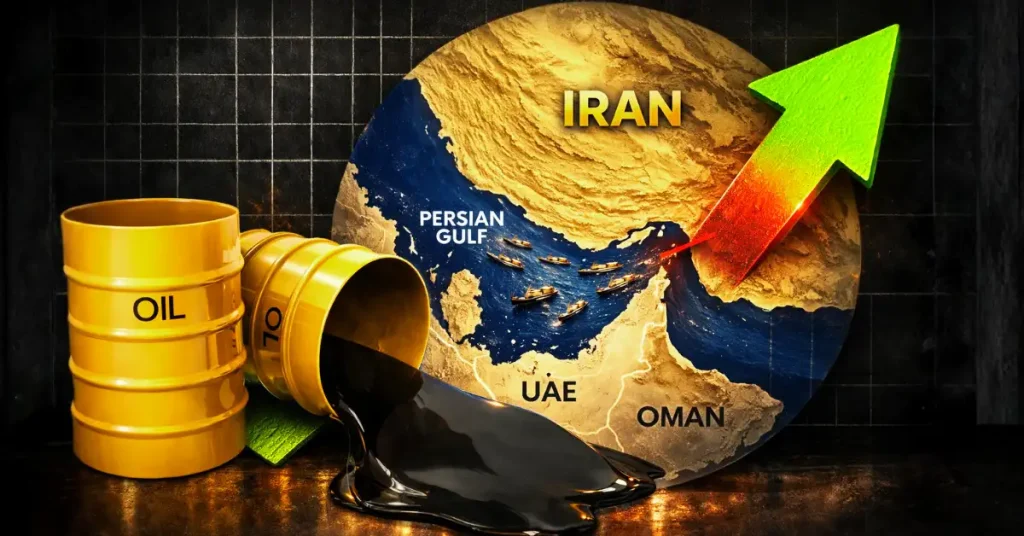
The Strait of Hormuz has been effectively closed for more than two weeks. Oil has surged more than 40% from pre-war levels, now trading around $103 a barrel. The United States has bombed military targets on Kharg Island – Iran’s main oil export terminal – and threatened to strike its oil infrastructure next if the Strait stays blocked.
Now a chart published by the Financial Times is raising a question the crypto market hasn’t answered yet.
The $175 Scenario
Coin Bureau put it: “The Strait of Hormuz closure could trigger the BIGGEST oil price surge in over 45 years. If the Strait stays closed, oil prices could rise ~150% to $175/barrel, matching the largest oil shock in history. This is EXACTLY what happened in 1979 during the Iranian Revolution.”
The FT chart maps real oil prices across every major geopolitical shock since 1972. The 1979 Iranian Revolution spike dwarfs everything except the 2008 demand peak. We are currently at the early stages of event number eight on that chart.
Iran’s new Supreme Leader, Mojtaba Khamenei, has vowed to keep the Strait closed as a “tool to pressure the enemy.” The EU has rejected Trump’s call for a military coalition to reopen it.
What Oil Does to Bitcoin
The relationship is not simple. When oil spiked above $100 on March 12, Bitcoin fell 2% in minutes. When the conflict began on February 28, Bitcoin dropped to $63,000 in hours. The mechanism is straightforward: oil drives inflation expectations, inflation expectations drive Fed policy, and tight monetary policy kills appetite for risk assets.
But the full picture is more interesting.
Bitcoin Has Held Up – But Will It Last?
The S&P 500 is down 2.36% year to date, while Bitcoin has gained around 12% from its conflict-day lows. Bloomberg called Bitcoin “an oasis of calm.”
When US and Israeli strikes hit Iran on February 28, Iranian citizens didn’t wait for analysis. Nobitex, Iran’s largest crypto exchange serving 11 million users, saw outflows spike nearly 900% within hours. The use case for censorship-resistant, borderless money was tested under live fire – and it worked.
The Dollar Question
Iran is selectively allowing oil shipments to China, India and Turkey – and is reportedly considering requiring those transactions to be settled in Chinese yuan rather than US dollars. If oil trades in yuan at scale, the structural case for non-dollar assets strengthens considerably.
At $103 oil, Bitcoin is floating near the $72-73k mark. The market’s answer at $175 is the question nobody has priced yet.
Never Miss a Beat in the Crypto World!
Stay ahead with breaking news, expert analysis, and real-time updates on the latest trends in Bitcoin, altcoins, DeFi, NFTs, and more.
FAQs
Higher oil prices drive inflation expectations, which can lead to tighter Federal Reserve policy. This typically reduces investor appetite for risk assets like Bitcoin, often causing short-term price drops.
Yes, analysts warn that a prolonged closure of the Strait could trigger a price surge of around 150%, matching the historic 1979 oil shock and pushing crude toward $175 per barrel.
If major oil transactions shift to Chinese yuan, it could weaken global dollar dominance. This structural shift might strengthen the case for non-dollar assets like Bitcoin as alternative stores of value.